7 Fascinating Tyne Bridge History Facts You Never Knew
Tyne Bridge history
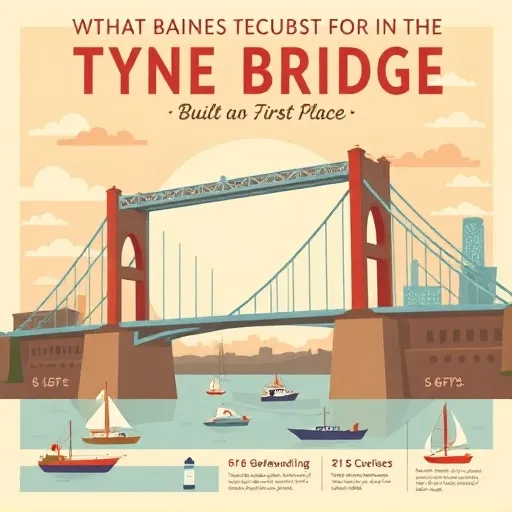
Why Was the Tyne Bridge Built in the First Place?
To really get the tyne bridge history, you first gotta understand the city it serves. By the early 20th century, the area around Newcastle and Gateshead had blown up into one of the busiest industrial hubs in Britain. Shipbuilding, coal export, heavy engineering — the River Tyne was basically the beating heart of the whole regional economy. But there was a giant problem: the existing river crossings couldn't handle the sheer volume of people, carts, trams, and eventually motor vehicles that needed to move between the two banks every single day.
The old bridge on the site, a stone structure dating all the way back to the 18th century, was simply overwhelmed. It was narrow, prone to nasty congestion, and completely unsuited to the modern era of motorized transport. Local authorities and regional planners knew something dramatic had to be done. The question wasn't whether to build a new bridge — it was what kind of bridge, and where. That decision would end up shaping the tyne bridge history we know today.
The Political and Economic Context Behind the Tyne Bridge History
The 1920s were a complicated time in the region. The area had been hit hard by post-war economic shifts, and unemployment was a serious concern. A major infrastructure project like a new river crossing wasn't just about traffic — it was also about jobs, civic pride, and signaling that the region was still a force to be reckoned with. This is a pattern you see again and again in the tyne bridge history and in the history of major public works in general: the symbolic value often matters just as much as the practical one.
A parliamentary act was passed in 1924 authorizing the construction of a new bridge, and planning moved forward quickly. The design that eventually won out was a steel arch design, and once you see it, you understand why. It's dramatic, efficient, and visually unforgettable — a real turning point in tyne bridge history.
The Design and Engineering That Shaped Tyne Bridge History
The Tyne Bridge is a steel arch bridge with a suspended deck, and at the time of its completion, it was the largest single-span bridge in the country. That's a big deal. The arch itself spans roughly 531 feet (about 162 meters), and the total structure stretches considerably longer when you count the approach viaducts on either side. When people dive into tyne bridge history, this engineering feat is usually the first thing that blows their minds.
Key Engineering Features That Define Tyne Bridge History
- Steel arch construction: The main arch was built using riveted steel sections, a technique that was standard for large-scale projects in that era but required enormous precision and manual labor.
- Suspended deck: The roadway hangs from the arch via vertical hangers, which transfers the load efficiently and allows for a relatively slim, elegant profile.
- Granite-faced abutments: The massive stone piers at either end anchor the arch and give the bridge a sense of permanence and weight.
- Approach viaducts: These carry traffic from the bridge down to street level on both sides and include arch openings of their own, creating a rhythmic visual pattern.
If you're into structural engineering, this bridge is a textbook example of how form and function can align beautifully. The arch isn't just decorative — it's doing real work, distributing compressive forces down into the abutments. The suspension hangers aren't just there for looks — they're holding up the road you drive on. Every piece of tyne bridge history reflects that careful balance of beauty and brute strength.
Construction Timeline and Challenges in Tyne Bridge History
Construction began in 1925 and took about three years, which is remarkably fast for a project of this scale, especially given the technology of the time. Workers — many of them local — labored in difficult conditions, often at height, riveting steel piece by piece. The project was a massive employer during a period when the region desperately needed it, and that human story is a huge part of tyne bridge history.
The bridge was officially opened in October 1928 by a member of the royal family, and the event drew enormous crowds. It was a genuine moment of civic celebration. The bridge instantly became a symbol of the region's resilience and ambition — a theme that runs all through tyne bridge history.
One interesting historical footnote: a similar arch bridge was being built on the other side of the world around the same time, and there's long been a debate about which one inspired which. We won't get into naming names here, but the resemblance is striking, and it's a fun rabbit hole for anyone interested in global engineering history.
The Tyne Bridge Through the Decades: A Living Tyne Bridge History
For its first few decades, the Tyne Bridge was the pride of the region. Trams ran across it, then buses, then an ever-increasing flood of private cars. It survived wartime bombing, post-war austerity, and the dramatic deindustrialization that reshaped the region in the 1970s and 1980s. Every chapter of tyne bridge history seems to mirror the ups and downs of the community around it.
The Decline and the Comeback in Tyne Bridge History
By the late 20th century, the bridge was showing its age. The green paint — that iconic color — had faded and peeled in places. Maintenance had been deferred. The surrounding area had fallen on hard times economically, and the bridge's condition reflected that. It was a rough patch in tyne bridge history.
But then something interesting happened. Starting in the late 1990s and accelerating through the 2000s and 2010s, the city underwent a cultural revival and economic revival. The bridge was repainted, restored, and re-lit. It became the centerpiece of major public events, including a famous New Year's Eve fireworks display and various cultural festivals.
By the 2020s, the Tyne Bridge was firmly established as an icon — not just locally, but nationally and internationally. It appears on merchandise, in films, in music videos, and in countless social media posts. It's one of those structures that has fully crossed over from "useful infrastructure" to "cultural treasure," and that transformation is one of the most fascinating parts of tyne bridge history.
The Tyne Bridge in 2026: Where Things Stand Now
As of 2026, the Tyne Bridge is in the middle of a major restoration program. This is a huge undertaking — engineers have been working on structural repairs, repainting, and upgrading the deck and hangers. The goal is to extend the bridge's life by decades and ensure it remains safe and functional for modern traffic loads. It's a big moment in tyne bridge history.
The restoration has been a logistical challenge because the bridge can't simply be closed for years. Traffic management, phased closures, and careful scheduling have all been part of the process. Local authorities and heritage organizations have been collaborating to make sure the work respects the bridge's historical character while bringing it up to contemporary standards.
Why the Restoration Matters to Tyne Bridge History
- Safety: Steel fatigue and corrosion are real issues for any century-old bridge. Regular inspection and repair are non-negotiable.
- Heritage preservation: The bridge is a listed structure, meaning it has legal protection. Any work has to be carefully planned to preserve its architectural integrity.
- Economic impact: The bridge is a key transport link. Closing it permanently isn't an option. Keeping it open and functional is essential for the regional economy.
- Tourism and identity: The bridge draws visitors and reinforces the city's brand. Its condition matters for reasons that go well beyond traffic.
If you visit in 2026, you might see scaffolding or temporary barriers, but don't let that put you off. The bridge is still there, still carrying traffic, still looking magnificent from a distance. And once the restoration is complete, it should look better than it has in decades — a bright new chapter in tyne bridge history.
What Makes the Tyne Bridge So Special in Tyne Bridge History?
Plenty of cities have iconic bridges. What makes this one stand out when you dig into tyne bridge history?
1. The Setting and the River Gorge Landscape
The bridge sits in a deep river gorge, surrounded by a dense urban landscape. It frames views in every direction and creates a dramatic silhouette against the sky. Photographers love it because it's almost impossible to take a bad picture of it.
2. The Color and the Verdigris Heritage Green
That distinctive green — often described as a kind of verdigris or heritage green — is instantly recognizable. It's not just a paint job; it's part of the bridge's identity.
3. The History and the Generations Who Crossed It
This bridge has been part of daily life for nearly 100 years. Generations have crossed it. It's been a backdrop for weddings, protests, celebrations, and quiet commutes. That accumulated human history gives it a weight that newer structures can't match — and it's why tyne bridge history resonates with so many people.
4. The Engineering and the Riveted Steel Achievement
From a purely technical standpoint, the bridge is a remarkable achievement. It was built with hand tools, rivets, and sheer determination. The fact that it's still standing and still working is a testament to the skill of the people who designed and built it.
Visiting and Experiencing the Tyne Bridge Today
If you're planning a trip to see the bridge in person, here are a few things worth knowing:
- Best viewpoints: There are several spots along the riverbanks and on nearby elevated areas that offer stunning views of the bridge, especially at sunrise and sunset.
- Walking across: Pedestrian access is available, and walking across gives you a completely different perspective than driving.
- Events: The bridge is often lit up for special occasions, and there are regular festivals and events in the surrounding area.
- Photography: Bring a camera. Seriously. The bridge is photogenic in every light and every season.
It's also worth exploring the surrounding neighborhoods, which have their own rich history and character. The bridge is the centerpiece, but it's part of a larger story about a region that has reinvented itself more than once.
Common Questions About Tyne Bridge History
How old is the Tyne Bridge?
It opened in 1928, making it nearly a century old. Construction started in 1925, so the whole project took about three years from start to finish.
How long is the Tyne Bridge?
The main arch span is about 531 feet (162 meters), and the total length including approaches is significantly longer. It was the longest single-span bridge in the country when it was completed.
Can you walk across the Tyne Bridge?
Yes, there are pedestrian walkways on both sides. It's a popular route for locals and visitors alike.
Why is the Tyne Bridge green?
The green color is a heritage choice that has become iconic. It's been repainted in that same shade during various restoration projects to maintain its distinctive look.
Is the Tyne Bridge being restored?
Yes, as of 2026, a major restoration program is underway to repair, repaint, and upgrade the structure for the future.
Final Thoughts: Why the Tyne Bridge Still Matters in Tyne Bridge History
Bridges are funny things. On one level, they're just infrastructure — a way to get from point A to point B. But on another level, they're statements. They say something about what a community values, what it's capable of, and what it wants to be remembered for.
The Tyne Bridge says a lot. It says that a region hit hard by economic change could still build something beautiful and ambitious. It says that engineering can be art. It says that a structure built for practical reasons can become a source of identity and pride for generations. That's the heart of tyne bridge history.
Nearly a century after it opened, the Tyne Bridge is still doing its job — carrying traffic, framing views, and reminding everyone who sees it that some things are built to last. If you ever get the chance to stand on its walkway at dusk, with the lights coming on and the river below, you'll understand why people care so much about it.
And if you're researching bridge history, urban development, or engineering heritage, the Tyne Bridge is a case study worth diving into. It's not just a footnote in a textbook — it's a living piece of tyne bridge history, still in use, still evolving, and still inspiring.