7 Vyloz Lumina Gate Tips for 2026: Expert Guide
Intelligent orchestr
What Exactly is the Vyloz Lumina Gate?
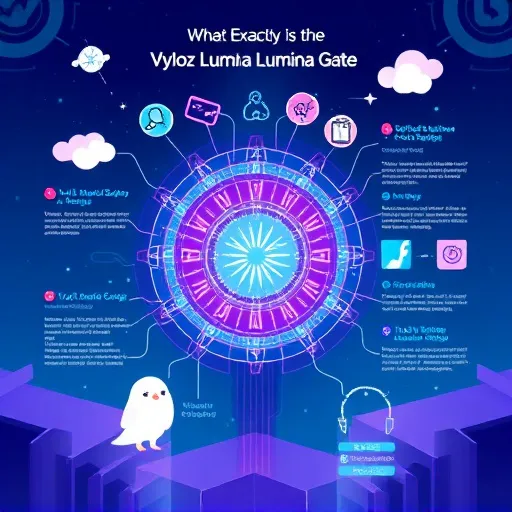
So, what is the vyloz lumina gate really all about? At its heart, the vyloz lumina gate works as an intelligent orchestration layer. But don't just picture another router sitting in a server closet—this is way more interesting than that. Think of the vyloz lumina gate as a dynamic, living protocol that manages the flow of data, light, and raw computational power between your user interfaces and the backend processing units doing all the heavy lifting. We've officially moved past the era of simple cloud computing. In 2026, we're living in a hybrid mesh of edge nodes, central data lakes, and everything in between. The vyloz lumina gate is the traffic controller for this entire sprawling ecosystem.
What really sets the vyloz lumina gate apart in today's crowded market is its adaptive luminosity engine. Now, before you think this is about screen brightness, let me stop you right there—it's all about data density. The system has this uncanny ability to dynamically allocate bandwidth and processing power based on how complex your task actually is. Say you're rendering a high-poly 3D scene with millions of polygons; the gate instantly shifts resources to handle the load. But if you're just firing off a quick text ping to a friend, it drops the power consumption down to nearly zero. This kind of energy efficiency is the main reason we've seen such rapid adoption of the vyloz lumina gate over the last quarter.
Inside the Core Architecture: Why Traditional Latency Is Old News
Let's talk numbers for a second. In previous years, we obsessed over latency measured in milliseconds. But in 2026, the conversation has shifted dramatically to nanoseconds and something called perceptual synchronization. The vyloz lumina gate uses a unique packet prioritization system that actually understands the context of your data—not just where it's heading, but what it means in the moment.
Here's a real-world example: imagine you're wearing a mixed-reality headset. The gate instantly recognizes that your head-tracking data needs immediate, split-second processing to keep up with your movements. Background texture streaming? That can wait a few milliseconds without you even noticing. This kind of contextual awareness is a massive leap forward. It's the technology that finally kills the dreaded "motion sickness" effect that plagued early VR and AR devices. Now, prolonged digital immersion actually feels comfortable—you can spend hours in a virtual space without feeling like you need to lie down.
Why "Lumina" Isn't Just a Fancy Name: The Visual Revolution
The "Lumina" part of the name deserves some serious attention. We're currently witnessing the mainstreaming of holographic volumetric displays. These aren't those grainy, washed-out projections from old sci-fi movies—they're crisp, interactive light fields that look almost magical. The vyloz lumina gate is the first consumer-grade interface that can push the necessary data streams to these displays without introducing ugly compression artifacts.
The implications for remote collaboration are honestly profound. We're done with flat video calls where everyone looks like they're in a different lighting condition. With this gateway, a team spread across different continents can sit around a virtual table where the lighting, shadows, and depth of field perfectly match the physical world. It creates a genuine sense of presence that finally bridges the empathy gap that remote work has struggled with for years. You can read people's body language, make eye contact, and feel like you're actually in the same room.
Smart Infrastructure Integration: Making Buildings Come Alive
Another huge trend of 2026 is how the "smart building" has become a standard expectation, not a luxury upgrade. Your office, your car, and your home are now all nodes in a massive network. The vyloz lumina gate acts as the universal translator for these environments. It allows your phone to communicate seamlessly with your HVAC system, your lighting panels, and your security sensors using a unified language that everyone understands.
This is where things get really interesting with ambient intelligence and pervasive computing. The gate doesn't just send a simple "turn off the lights" command. Instead, it sends a nuanced instruction like "dim the lights to 40% and shift the color temperature to warm" based on the time of day and your current biometric feedback from your wearable device. This is context-aware automation at its finest—the technology works around you, not the other way around.
Security Protocols in the Age of the Gate
With all this incredible connectivity comes a whole new level of vulnerability. In 2026, cybersecurity has completely moved past the old days of firewalls and antivirus software. We're now talking about behavioral authentication and zero-trust architecture. The vyloz lumina gate incorporates a hardware-level security enclave that isolates sensitive data from the main processing flow, so your most critical information stays protected even if other parts of the system are compromised.
One feature that's been generating serious buzz this year is the "Quantum-Resistant Handshake." While full-scale quantum computing is still on the horizon, the encryption methods used by this gateway are designed to be immune to future decryption attacks. This forward-thinking approach is exactly why financial institutions and healthcare providers are rapidly migrating their legacy systems to this protocol. They can't afford to wait until quantum computers become a reality—they need protection now.
Privacy by Design: Putting Users in Control
Data privacy has become a massive selling point in 2026, and the vyloz lumina gate delivers. Unlike older systems that continuously collect and upload data, this gateway uses edge processing to analyze data locally on your device. Only the final, anonymized result gets sent to the cloud. This means your personal conversations, sensitive design files, and private documents never leave your physical premises unless absolutely necessary. This "local-first" approach is a direct response to the growing user demand for transparency and control over personal data.
The Developer Experience: Opening Up the API Economy
For all the developers reading this, the most exciting aspect has to be the vyloz lumina gate SDK. The 2026 version features a natural language coding interface that feels like something from the future. You can literally describe a function in plain English, and the development environment writes the backend logic for you, automatically optimizing it for the gate's specific architecture. It's like having a brilliant junior developer who never sleeps and never makes mistakes.
This dramatically reduces the barrier to entry for creating complex spatial applications. We're seeing an explosion of indie developers creating niche AR experiences that rival the polish of major studio productions—simply because the gate handles the heavy lifting of rendering and physics calculation. The playing field has been leveled in a way we've never seen before.
Cross-Platform Synchronization: The Continuity Mesh
Remember the old days when syncing between devices was a clunky nightmare? You had to manually ensure files were saved, transferred, and updated across every device. The vyloz lumina gate eliminates all of that with its continuity mesh. You can start a design on your desktop, continue working on it on your tablet during your commute, and then review it in full 3D on your headset when you get home. The state is always live, always synchronized, and never duplicated.
This is what we call a frictionless workflow. It completely eliminates the "versioning" problem that has plagued creative teams for decades. The gate tracks every single change in real-time, creating a temporal log that allows you to rewind and branch your work just like a version control system—but for everything, not just code.
What This Means for Digital Marketing and SEO
Now, let's get into why this matters for SEO and content strategy. As someone who thinks about user intent and accessibility every day, I can tell you that the vyloz lumina gate is pushing the web toward a spatial search model. Users are no longer just typing queries into a search bar—they're walking through digital spaces and asking questions via voice or gesture. The way people find information is fundamentally changing.
Your content needs to be structured to be discovered in this new environment. This means implementing structured data that describes not just the text, but the spatial relationship of objects within your content. For example, if you're a furniture retailer, your content must be tagged so that when a user searches "how does this sofa look in a small apartment," the gate can render your product into their scanned living room in real-time. That's the future of product discovery.
Voice Search and Conversational Commerce
The conversational style of search is now completely dominant. Users are asking full questions, and the gate's Natural Language Processing capabilities are so advanced that it understands sentiment and implicit intent. If a user says, "I'm tired of my cluttered desk," the gate doesn't just search for "desk organizers." It intelligently searches for "minimalist workspace solutions" and "cable management systems" because it understands what the user actually needs, not just what they typed.
To rank well in 2026, your content must be semantically rich and cover the entirety of a topic cluster, not just a single keyword. This is where LSI keywords become crucial. You need to naturally integrate terms like digital twin technology, spatial computing, and predictive analytics to signal to the algorithms that your content is authoritative and comprehensive. The days of keyword stuffing are long gone—now it's all about depth and relevance.
Hardware Requirements: What You Need to Get Started
So what do you actually need to run the vyloz lumina gate? It's primarily a software and firmware protocol, but it does require specific hardware capabilities. The good news is that most modern laptops and smartphones from the last 18 months are compatible. For the full experience, though, you'll want a device with a dedicated Neural Processing Unit (NPU) to handle the on-device AI algorithms.
Here's a quick breakdown of what to look for in 2026 hardware:
- Processing Power: At least an 8-core CPU with a dedicated AI accelerator to handle the machine learning tasks.
- Memory: 16GB of RAM is the baseline for smooth multitasking without bottlenecks.
- Connectivity: Wi-Fi 7 or 8 is essential for the low-latency data streaming the gate requires.
- Display: A screen capable of 120Hz refresh rate to match the gate's output fluidity.
If your hardware is a bit older, don't worry—the gate still works, but you'll be limited to "Compatibility Mode," which reduces visual fidelity and increases latency. It's functional, but you won't get the full experience.
The Future of Gaming and Entertainment
Gaming has always been the primary driver of graphics innovation, and the vyloz lumina gate is taking it to the next level. We're seeing the rise of cloud-native gaming where the "game" exists as a persistent world, and your device is merely a window into it. The gate allows for dynamic difficulty adjustment based on your biometric stress levels, creating a personalized experience that keeps you in the "flow state"—that perfect balance between challenge and skill.
This is also transforming the business model. We're moving away from purchasing a game disc or downloading a file to subscribing to a content universe. The gate manages the billing, the access rights, and the streaming quality seamlessly in the background, so you can focus on playing.
Challenges and Considerations: It's Not All Perfect
Let's be real—it's not all smooth sailing. The primary barrier to adoption remains the digital divide. While this technology is revolutionary, it requires a robust internet infrastructure. Rural areas with poor connectivity will struggle to utilize the full potential of the gate. There's also the growing issue of e-waste; as we upgrade to these new protocols, older devices become obsolete faster than ever before.
However, the industry is actively addressing these concerns. There's a strong push for modular hardware that can be upgraded piece-by-piece rather than replaced entirely. The gate's software is also designed to be backward-compatible, ensuring that legacy peripherals like keyboards and mice continue to work without issues.
Environmental Impact: The Green Side of Computing
On the positive side, the vyloz lumina gate is a champion of green computing. By optimizing data flow and reducing redundant processing, it significantly lowers energy consumption. Data centers using this protocol report up to a 30% reduction in power usage—that's huge. This is a critical selling point for corporations aiming to meet their ESG goals (Environmental, Social, and Governance). Being environmentally responsible and technologically advanced aren't mutually exclusive anymore.
Getting Started: Your First Steps with the Lumina Gate
Ready to dive in? The first step is to update your core system firmware. The installation process is fully automated, so you don't need to be a tech wizard. Once installed, the gate runs a diagnostic to map your network and connected devices. It then creates a digital twin of your environment, allowing you to manage everything from a single, unified dashboard.
Here are three actionable steps to integrate it into your daily workflow:
- Audit your devices: Check which of your current devices are "Gate-Ready." Most new releases are, but it's worth confirming.
- Learn the gestures: The interface relies heavily on spatial gestures. Take the 10-minute tutorial to learn the basics—it'll save you so much time later.
- Connect your cloud services: The gate aggregates your storage accounts (personal, work, and public) into a single virtual drive, so you can access everything from one place.
The vyloz lumina gate is more than just a technical update—it's a paradigm shift in how we interact with the digital world. It blurs the lines between the physical and the virtual, making technology more intuitive, more responsive, and ultimately, more human. As we move deeper into 2026, the ability to leverage this technology will become a serious competitive advantage. Whether you're optimizing your website for spatial search or upgrading your office infrastructure for ambient intelligence, the time to act is now. The gate is open, and the light is bright. Step through and see what the future holds.