7 Key Facts About Vyloz Orbiton Den in 2026: Expert Guide
Discover 7 essential facts about vyloz orbiton den in 2026. Learn expert tips, industry insights, and practical advice to master this trending topic. Read our comprehensive guide now.
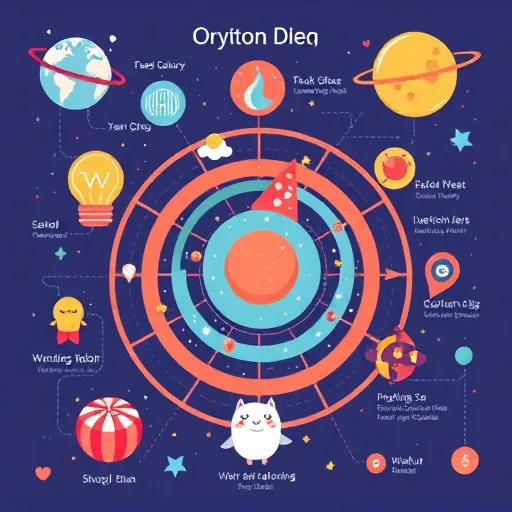
Adaptive spatial dat
What is Vyloz Orbiton Den? Breaking Down the Basics
Let's kick things off with the essentials. The term vyloz orbiton den isn't just a random mashup of tech buzzwords thrown together for fun. In today's rapidly evolving digital landscape, it represents a complete conceptual framework that fuses adaptive algorithmic processing with spatial data mapping. If you're scratching your head, think of it this way: it's the missing bridge between raw, brute-force computational power and the intuitive, organic ways we actually interpret information as humans. In more down-to-earth terms, vyloz orbiton den is closely tied to a fresh generation of predictive modeling tools. These aren't your grandpa's analytics dashboards. Instead of just crunching historical numbers and spitting out static reports, these tools build dynamic, self-adjusting models that can anticipate shifts in user behavior or system performance *before* those changes even happen. That's a massive leap forward from those clunky, static dashboards we were all staring at just a couple of years ago, wondering what the heck the numbers actually meant.Core Components: The Three Pillars of the Vyloz Orbiton Den Framework
To genuinely wrap your head around this, you need to break it down into the three main pillars that hold the whole thing up. Each piece plays a distinct role, and together they create something pretty special.- Vyloz: This first piece is all about velocity and throughput. Here's the thing about 2026—speed isn't just about raw bandwidth anymore. It's about what we call the *latency of insight*. The Vyloz component makes sure data gets processed quickly, sure, but more importantly, it guarantees that the insights pulled from that data are delivered in near real-time. We're talking split-second decision-making.
- Orbiton: This is the architectural layer, the structural backbone. It handles the interconnectivity of data points in a way that's fundamentally different from linear models. Instead of looking at data like a straight line from A to B, Orbiton treats it like a series of concentric circles—think planets orbiting a sun. Every single piece of information influences the others in a non-linear, multi-directional dance. It's complex, but it's also incredibly powerful.
- Den: This is the storage and retrieval mechanism, and it's a game-changer. Unlike traditional cloud storage that pulls everything from a central hub, the Den concept leans on edge-centric caching and hierarchical memory structures. The goal? Making sure the most relevant data is always within arm's reach, cutting down on those constant, annoying round-trips to central servers.
Why Vyloz Orbiton Den Is Gaining Serious Traction in 2026
The digital world has shifted dramatically over the last 18 months. We've moved past the initial frenzy around generative AI and landed in the "normalization" phase, where the real focus is on practical utility and cost-efficiency. And honestly? This is exactly the sweet spot where vyloz orbiton den shines brightest.The Big Shift Toward Decentralized Processing
One of the biggest reasons everyone's suddenly talking about vyloz orbiton den is the growing frustration with centralized data processing. Companies are finally waking up to the fact that shoving every single byte of data to a central cloud server is inefficient, expensive, and honestly, a bit of a privacy nightmare. The vyloz orbiton den approach pushes for a distributed intelligence model, where processing happens much closer to where the data actually originates. This aligns perfectly with the big 2026 trends of on-device AI and edge computing. By applying the principles baked into the Den component, developers can build applications that aren't just faster, but also way more resilient when the network goes down. No more panicking when the Wi-Fi drops.The Growing Demand for Predictive, Not Reactive, Systems
Another huge driver? The shift from reactive to predictive analytics. In the old days, businesses stared at dashboards to see *what happened*—a post-mortem of sorts. Now, they want to know *what's going to happen next*. The vyloz orbiton den framework makes this possible by using the Orbiton layer to simulate various "orbits"—essentially, different potential future states based on current inputs. This isn't your standard statistical regression. It's a much more fluid, probabilistic modeling technique that adapts on the fly as new data streams in. That makes it incredibly effective for dynamic environments like supply chain management or algorithmic trading, where conditions can flip in a heartbeat.Practical Applications: Where You'll Actually See Vyloz Orbiton Den in Action
Theory is great, but let's ground this in reality. Here are a few specific areas where vyloz orbiton den is genuinely making waves in 2026.1. Next-Level Natural Language Processing (NLP)
We're seeing a fascinating convergence happening between vyloz orbiton den and next-gen NLP models. The Orbiton structure is particularly useful for understanding semantic context. Instead of just mechanically parsing words, the system can grasp the *gravity* of a sentence—the emotional weight, the implied intent—by mapping it against a multi-dimensional knowledge graph. The practical result? Virtual assistants and customer service bots are becoming dramatically better at picking up on nuance. They don't just match keywords anymore; they actually understand the sentiment and the subtext of a query. That means more human-like interactions and fewer frustrating "I'm sorry, I didn't quite catch that" moments.2. Autonomous Systems and Robotics
When it comes to autonomous vehicles and industrial robotics, decision-making speed isn't just a nice-to-have—it's critical. The Vyloz component (velocity) paired with the Den (localized storage) lets robots process sensor data and execute commands with minimal delay. This is absolutely crucial for safety and efficiency in dynamic, unpredictable environments. Picture a warehouse robot that doesn't have to wait for a central server to tell it how to dodge a sudden obstacle. With vyloz orbiton den, it can make that split-second decision locally, instantly, using a cached set of pre-calculated "orbit" paths. That's the difference between smooth operations and a pile-up of toppled boxes.3. Hyper-Personalized User Experiences
For marketers and product managers, this framework offers a fresh lens on user journeys. The Orbiton concept treats each user as the center of their own personalized universe. Every interaction, every click, every tiny pause is a data point that orbits around them. By analyzing these orbits, systems can predict what content or product a user will need *before* they even think to search for it. This goes way beyond basic recommendation engines. It creates a truly adaptive interface that morphs and shifts based on the user's current state and historical patterns. Creepy? Maybe a little. Effective? Absolutely.The Role of LSI Keywords in the Vyloz Orbiton Den Ecosystem
Okay, switching gears for a second—as an SEO analyst, I can't dive into a topic without addressing how it connects to content discovery. The term vyloz orbiton den is frequently discussed alongside a bunch of Latent Semantic Indexing (LSI) keywords. These are the related concepts that help search engines figure out the context of the main topic. When you're writing about this framework, it's essential to weave in related terms like:- Adaptive algorithm optimization
- Decentralized data architecture
- Real-time predictive analytics
- Edge intelligence systems
- Contextual data mapping
- Non-linear data modeling